
Engaging & Encountering Courage

What have you done recently that has required courage or bravery?
When I was a teenager I sang the national anthem at our high school swim meets. The thought of doing this now makes me want to run and hide. I look back at teenage me and think, “Wow, how scary, how courageous.”
This sparked a thought: How do we, as adults, engage with courage/bravery, either by choice or circumstance?
I’ve spent the last few weeks surveying my community and asking how they are practicing courage as an adult. The answers are fantastic and I’m going to share them with you. But as these answers came into my inbox, it got me thinking about the courage I witness day in and day out in this profession as a therapist.
Before I get into it, let me start with a disclaimer.
*Courage is unique and specific to each person. For some, these examples will resonate. For others, they will not. What is big and brave to you, is small and insignificant to another. What is a walk in the park to you, is the bravest thing someone else may ever do. *
Courage in the Therapeutic Journey
The therapy journey is full of moments that invite your courage. Not all of these steps will require your courage, but here are a few ways it can show up in each part of the process:
The first point of contact. You’re asking for help. You’re saying you could use support. For some, this is scary. Facing your fears is courage.
The first meeting. Opening up to a (professional) stranger. Not knowing what you’ll say, or what emotions may surface, how vulnerable you’ll be, or how comfortable you’ll feel. Facinguncertainty is courage.
Doing the work. As you go through therapy, you may be opening up and saying things that are hard to say. You may be confronting patterns in your life, or revisiting painful memories. You may start to notice your internal dialogue isn’t so sweet. You may start to see unhealthy patterns in your relationships, and have to confront how you contribute to them. Discovery, and ownership is courage.
Change and growth. This part of therapy may elicit the most feelings of discomfort, and require the most courage: doing something differently. Apologizing when you’re wrong. Communicating a boundary. Having honest and difficult conversations. No longer avoiding conflict. Being kind to yourself! Sharing your joy with others. Committing to a relationship - or ending one - or starting a new one. Putting yourself out there. Learning how to listen with love, instead of defensiveness. Being more present with your family, your kids, your spouse, your friends, your emotions. Being willing to change is courage.
As you read through the examples that may require your courage in the therapy process, you may also identify where fear holds you back. It may be too hard to make the initial call, or show up to the first appointment, or be honest about what’s really going on, or seem way too risky to change. If so…
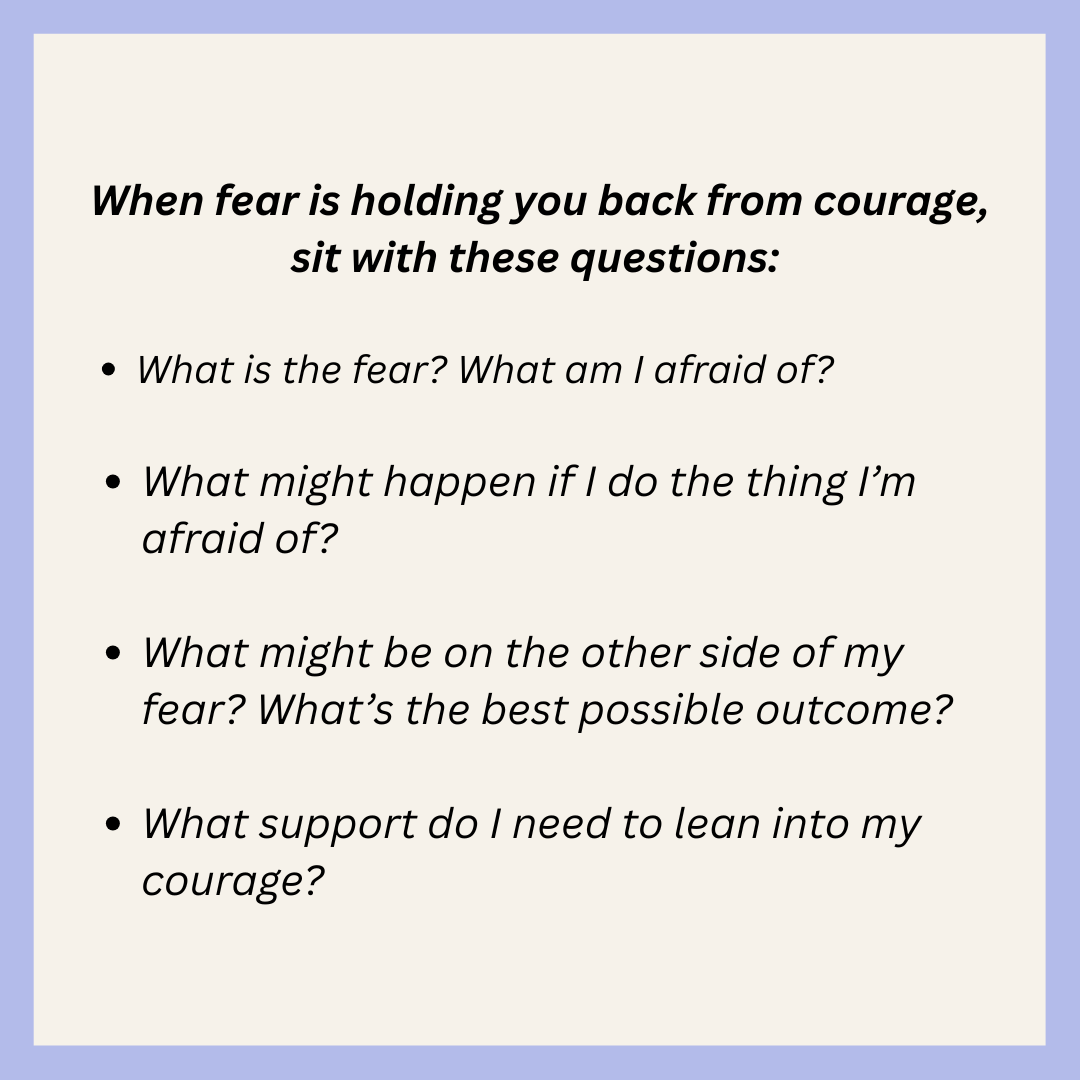
Ok, the fun part. These are answers from my brave and vulnerable community (thank you to all who shared)!
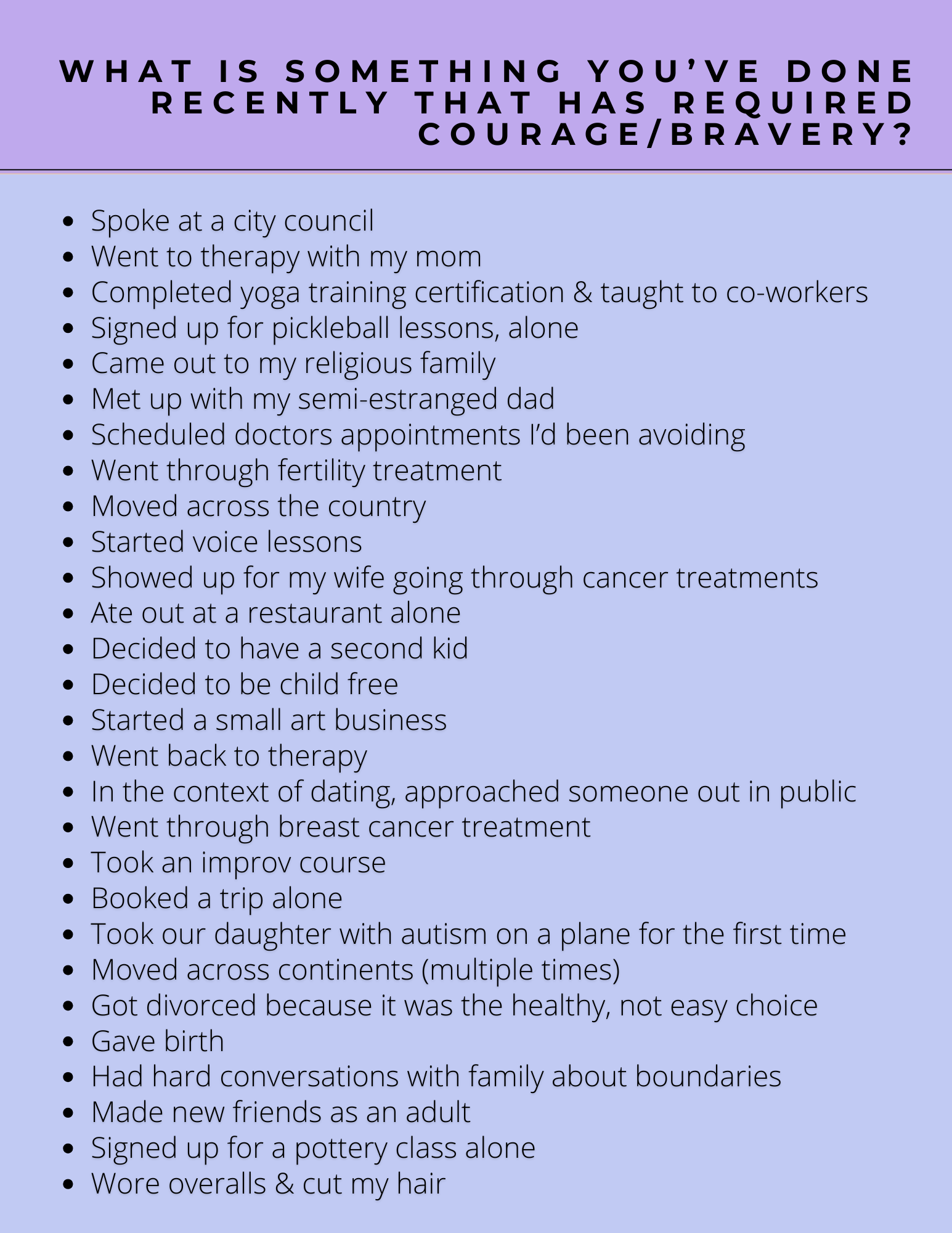
As I read through each response, it has opened my eyes to the visible, and invisible things that people are courageously doing.
Now, as I watch friends, family, clients and strangers navigate this world, I am filtering it all through the lens of courage. “Look what brave things we can do!” As a fellow human being, this shift in my perspective makes me more curious, more empathetic, and more of a cheerleader for all of us as we navigate our own paths in this world.
May good things find us on the other side of our fear.
Now, I can’t promise that I will sing in public again, but who knows… never say never!
Actionable Reflection Steps:
Keep a list of the ways that you encounter courage in your life
Make a list of the things you would do if you were a little braver - ask yourself what holds you back and why?
Ask your community how they are engaging with courage.
